The Psychology of Money - Book review
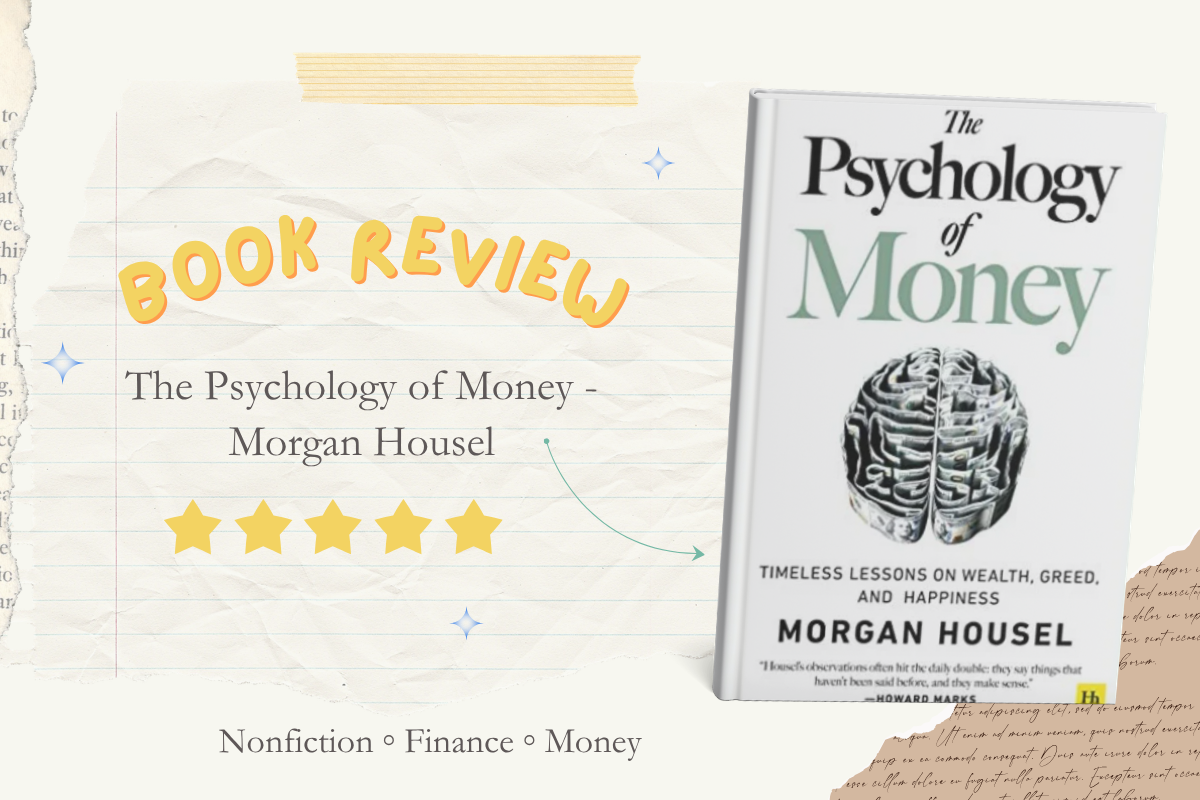
Morgan Housel wrote an published The Psychology of Money 2020 and aver since the book hit the shelves, it’s been a best seller.
I had the e-book version of The Psychology of Money and read it on my Tolino e-reader.
From this day forward, I have decided to go go into more details when it comes to Nonfiction and Self-help books. It is difficult to not label anything mentioned below in the review as “spoiler free”, because I genuinely want to write about the valuable lessons I have learned from reading the book.
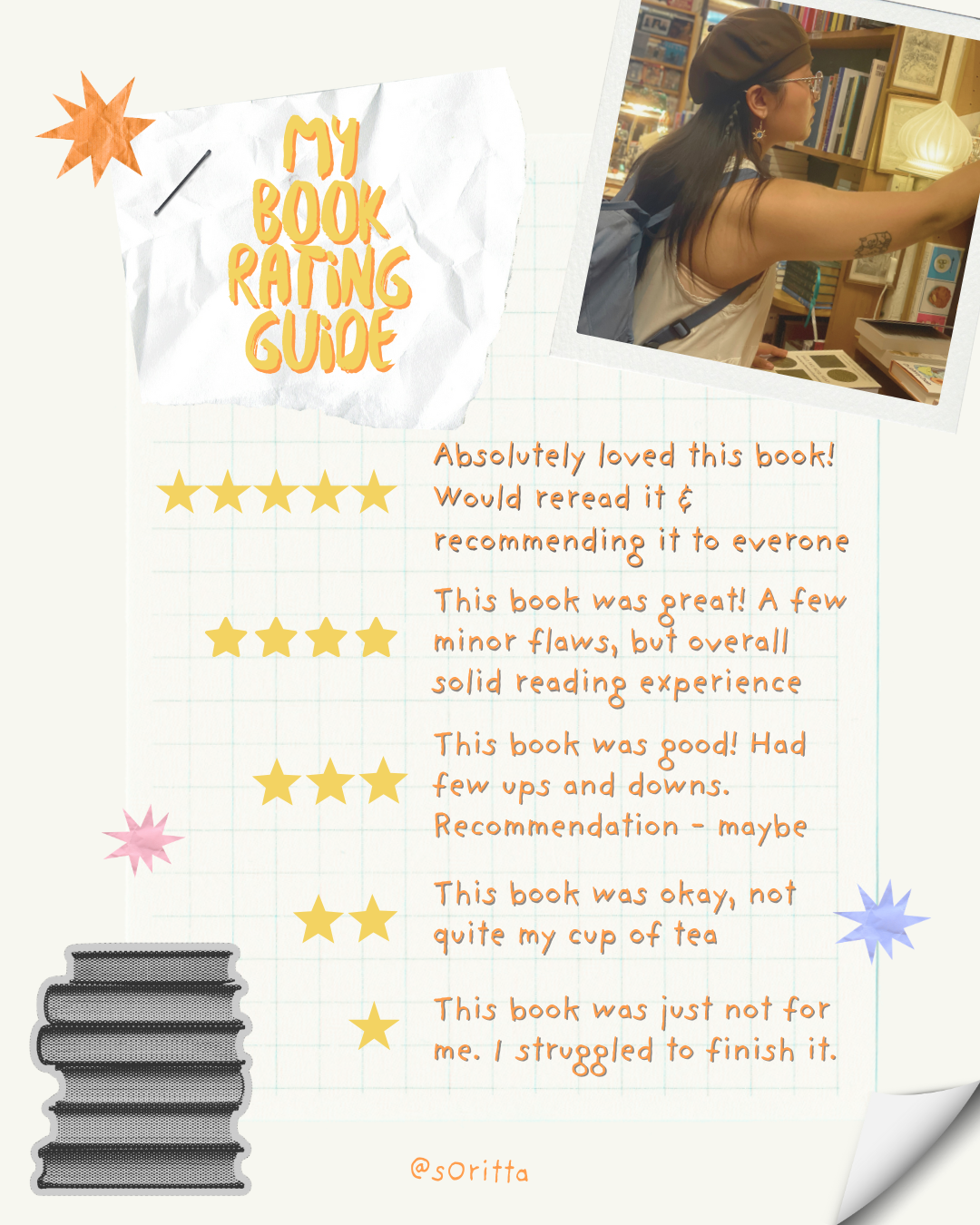
You can also refer to my book rating guide that will be attached at the bottom.
The blurb
Doing well with money isn’t necessarily about what you know. It’s about how you behave. And behavior is hard to teach, even to really smart people.
Money―investing, personal finance, and business decisions―is typically taught as a math-based field, where data and formulas tell us exactly what to do. But in the real world people don’t make financial decisions on a spreadsheet. They make them at the dinner table, or in a meeting room, where personal history, your own unique view of the world, ego, pride, marketing, and odd incentives are scrambled together.
In The Psychology of Money, award-winning author Morgan Housel shares 19 short stories exploring the different ways people think about money and teaches you how to make better sense of one of life’s most important topics.
Thoughts on the book
The Psychology of Money is a great book—one where I found myself marking line after line. Each chapter title felt like both a reminder and a tip. In fewer than 250 pages, Housel manages to pack in a wealth of knowledge, yet never comes across as judgmental.
The book focuses on American (financial) history, with topics such as Roth IRAs. Still, I found that there is a great deal of general wisdom to take away from it. As someone who only started investing a year ago and has recently taken financial responsibility for my future, I would still consider myself a rookie with basic knowledge when it comes to financial literacy.
If you have never heard about ETFs, stocks, trading, or anything of that sort, this book may be a good fit.
The Psychology of Money does not give you a step-by-step guide on which stocks to buy. Instead, the chapters shine a light on how important our money habits are. The goal, therefore, may not be to get rich, but to stay rich—and, more importantly, to know when we have enough. The book feels like a kind of mindset treasure map.
Many of its key insights may seem obvious in hindsight:
Spending more than you have will eventually make you broke
The importance of luck and risk
People from different generations can think vastly differently about the same topic
Nonetheless, it is precisely these seemingly obvious truths that stayed with me. Morgan Housel writes that people make financial decisions based on what makes sense to them and their worldview. This is why we cannot force others to see things from our perspective—it simply is not possible. In other words: don’t judge other people’s decisions by your own standards.
What struck me most was the realization that as my salary increased, my lifestyle inflated along with it. Setting fixed costs and grocery bills aside, I suddenly had access to higher-quality food because I could afford it without feeling the strain. I ate out more because it was convenient, and the occasional purchase was justified as “good for my soul.”
The fastest way to seem rich is to spend money on things that make you look rich—and that is also the fastest path to becoming broke.
Aha! Although it is undeniable that life in this economy is expensive, I was not fully aware of how my spending habits reinforced that belief. The Psychology of Money really showed me how emotionally charged the topic of money is.
I can absolutely see why this book became a bestseller and why it has resonated with so many readers. I would warmly recommend getting your hands on a copy if you want to better understand why you spend the way you do.
Memorable parts of the book
This section will include spoilers of the book. You have been warned :)
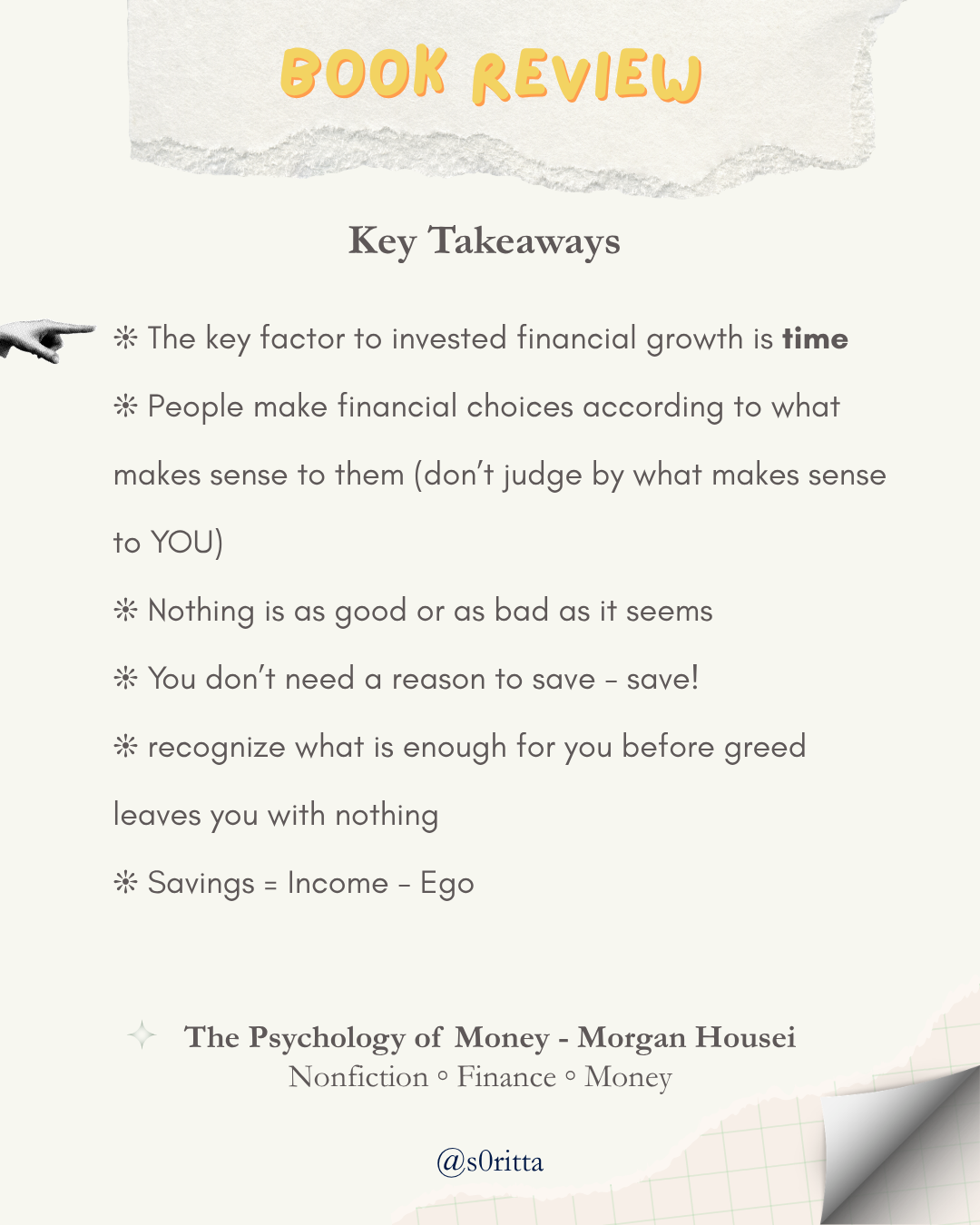
Each chapter title held a valuable lesson
Saving = Income - Ego
You don’t need a reason to save
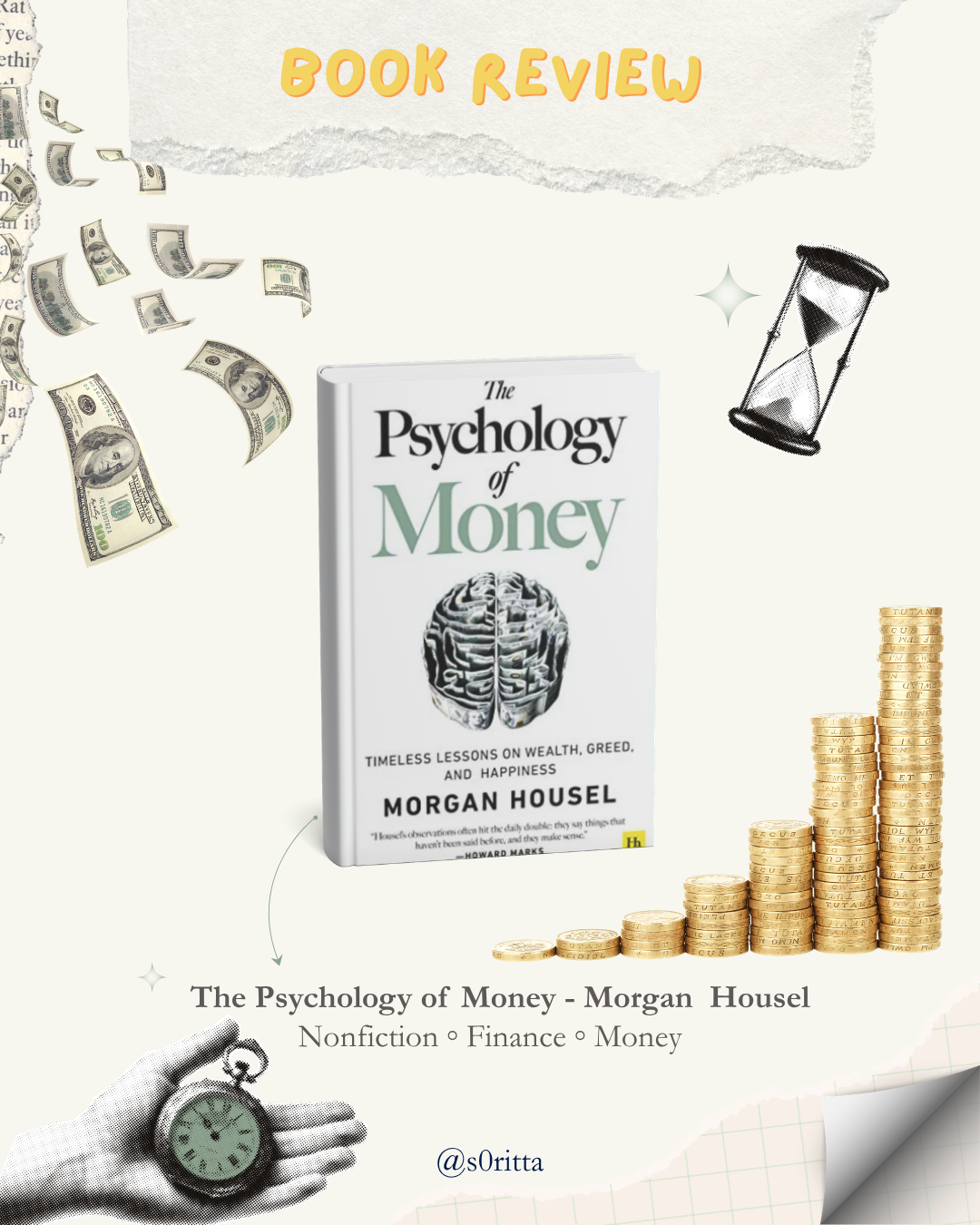
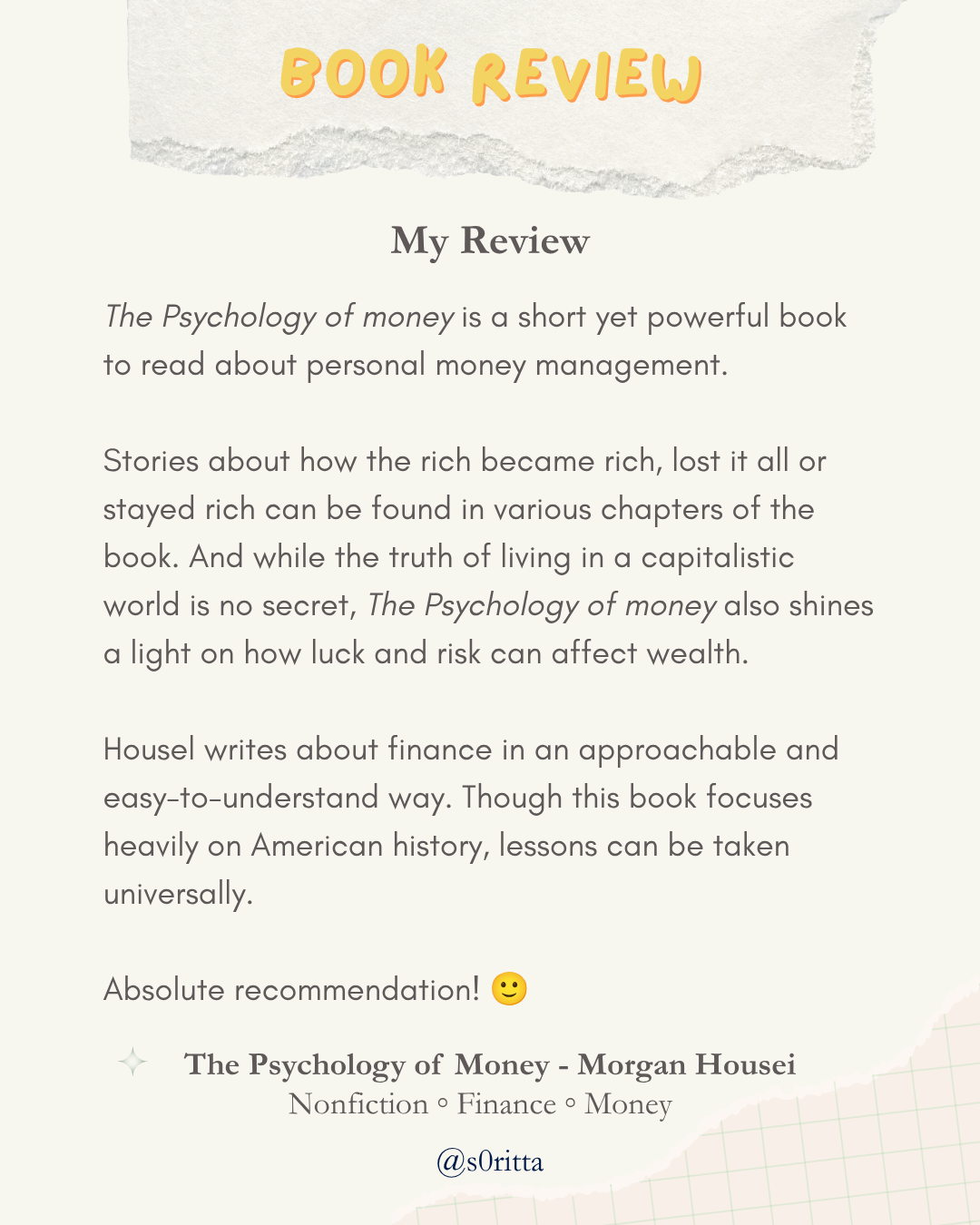
What I posted on Instagram
Verdict
5/5 stars
Psychology of Money is worth the hype it gets and is book I can warmly recommend reading!
Thank you for making it this far and reading through my review! I would love to read about your thoughts or feedback :) You’re welcome subscribe to my newsletter or leave tips for me. I appreciate you spent here today!
Lead your dreams,
Soso